
Originally published on www.apoint.co.il.
What if you discovered that every shekel you invest in technology is actually insurance against millions of shekels in lost revenue? Many managers in Israel experience system maintenance as a budget burden characterised by sudden downtime and slow performance that frustrates staff. You probably know the uncertainty when the monthly support invoice arrives, without understanding its real impact on the organisation’s bottom line.
This guide is meant to change the equation. We will teach you how to budget information-system maintenance cost correctly in 2026, so it turns from a painful technical expense into a strategic growth engine that guarantees industrial calm and operational precision. We will dive into updated economic models in the local market, present strategies for achieving zero downtime, and understand how to build a known-in-advance maintenance budget that saves up to 25% of your unplanned IT spend.
Key points
- Turn system maintenance from a technical expense into a strategic growth engine that produces measurable business impact.
- Analyse the parameters that affect information-system maintenance cost, from database complexity to choosing end technology.
- Maximise ROI by cutting downtime and extending the life of the existing system for years.
- Choose the pricing model that fits the organisation — between a monthly retainer for peace of mind and a flexible hour bank.
- Embed proactive maintenance at A Point Systems standard to guarantee stability on Microsoft Access and SQL Server technologies.
What does information-system maintenance cost include in 2026?
Managing information systems in 2026 needs deep business understanding, beyond technical understanding. Information-system maintenance cost is not only bug fixing. It is defined as the total spend invested in preserving, updating, and optimizing software infrastructure in the organisation. Maintenance is the pulse of the business. It makes sure systems continue to support strategic goals without interruption.
The main cost components include ongoing technical support, critical security updates, and real-time performance monitoring. Distinguish operational maintenance, which is meant to keep the system alive, from upgrading and developing new capabilities. Many managers mistakenly think these are the same category. In practice, software life-cycle cost may make up 80% to 90% of total product investment over the years. Too little investment in maintenance creates “technical debt” that explodes at the least suitable moment.
A price that is too cheap for maintenance is a warning light. In the Israeli market, a maintenance retainer that is too low usually reflects a lack of deep checks or ignoring security updates. At the moment of truth, when the system collapses or is breached, the cost of an emergency hour will be several times the monthly saving. Precision in budgeting is the key to stable growth.
Preventive maintenance vs break-fix maintenance
Break-fix maintenance is the most expensive. When a system collapses, the damage is not only financial. Lost productivity and reputation damage are hard to price. The cost of an hour of downtime in a mid-size organisation in Israel can reach ₪40,000 and above, depending on system complexity.
- Preventive maintenance: investment in periodic checks, database cleanup, and code scans.
- Preventing collapse: identifying bottlenecks before they paralyse the organisation.
- Optimization: correct maintenance prevents the need for urgent, expensive database performance improvement.
Security updates and version management
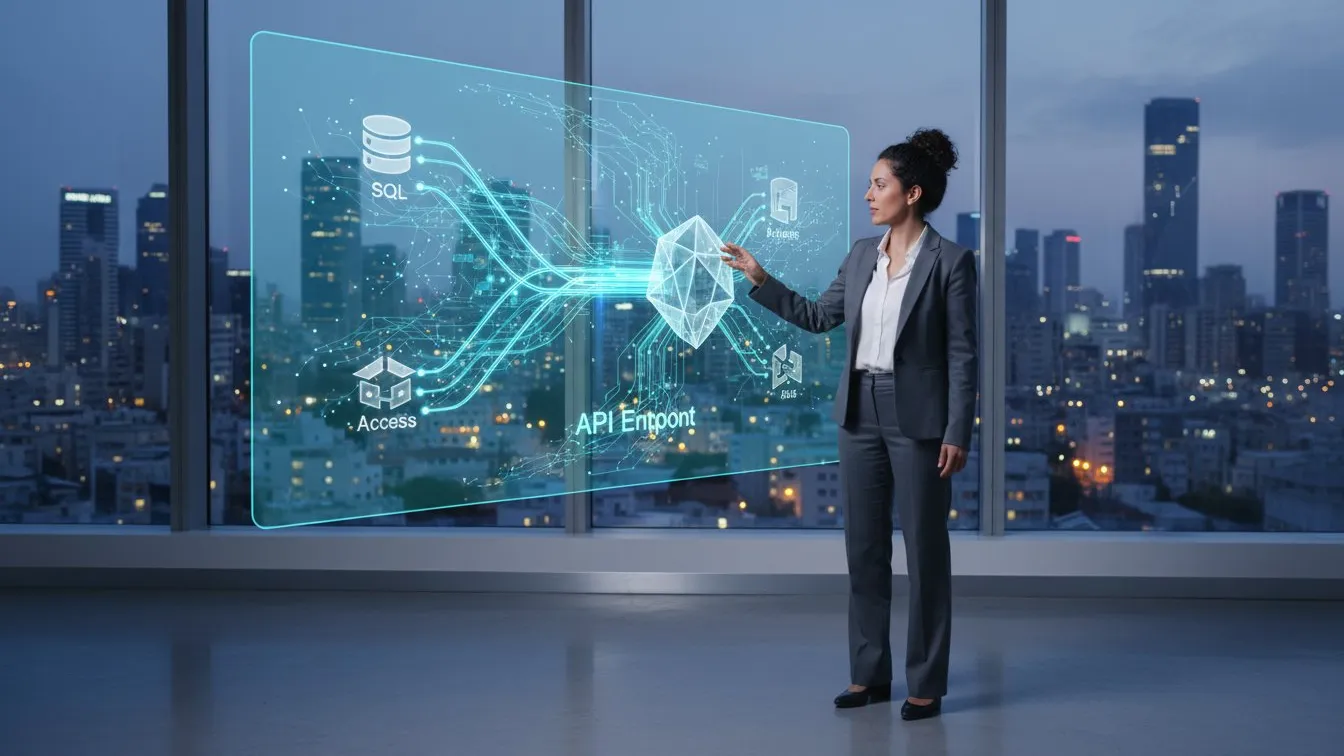
In 2026, information security is an inseparable part of maintenance. New security holes are found every day. Version management on systems based on Microsoft Access or SQL Server needs specific expertise. A version update is not only clicking a button. It needs compatibility tests to make sure no other component breaks in the process.
Monthly retainer costs are affected directly by the required security level. In the cloud, security management becomes more complex because of the need for access monitoring and advanced encryption. An organisation that invests in ongoing updates reduces ransomware risk by 75%. Precision in version management is what distinguishes a stable system from a vulnerable one. Choosing a technology partner who understands the link between code and security is a strategic decision, not only a technical one.
The parameters that set the maintenance price
The maintenance price is not an arbitrary figure. It is a direct derivative of architecture, business needs, and the risk level the organisation chooses to manage. In 2026, information-system maintenance cost is set by system complexity, with user count and API integrations as the main metrics. A system connected to 10 external interfaces needs double monitoring resources versus a closed system, because every third-party update can stop business continuity.
Base technology plays a critical role in pricing. Maintaining Access-based legacy systems becomes 35% more expensive than modern web systems. The reason sits in a shortage of skilled developers and compatibility problems with current operating systems. Academic studies emphasise that factors affecting maintenance costs include more than 30 different parameters, from original code quality to real-time support-team skill.
The SLA (Service Level Agreement) is your insurance component. An organisation that requires development-team availability within 4 hours will pay a significant premium versus an organisation that settles for a response within a business day. That is a price tag on peace of mind and on business continuity in a critical fault.
Database complexity
Data structure dictates monthly work hours. A database that is not normalised needs periodic data cleanup to prevent slowness. On SQL Server, maintaining complex queries and procedures is essential. Without constant optimization, system performance drops 20% a year, which raises technical-support costs in the long term.
Hosting and infrastructure
System location changes the expense structure. A physical server in the organisation needs hardware, electricity, and air-conditioning maintenance, while a virtual server (VPS) moves responsibility to the infrastructure vendor. Moving to managed cloud hosting saves about 15% of direct maintenance costs. A critical price component is the backup and disaster-recovery (DRP) array. In 2026, automatic multi-layer backup is not a luxury. It is a required standard for protecting organisational information.
Common models for pricing maintenance services
Choosing the right economic model is a strategic decision that affects organisation stability directly. In 2026, managers no longer look only at the hourly price, but at the system’s impact value. Information-system maintenance cost is derived from the operational risk you are willing to absorb. Understanding the different models allows budget precision and prevents surprises at the end of the quarter.
- Monthly retainer model: a fixed payment that guarantees peace of mind and high availability (SLA). This is the preferred model for mission-critical systems, where every minute of downtime translates into a direct money loss. The retainer usually includes proactive monitoring and ongoing security updates.
- Hour bank: a flexible solution where you buy hours in advance, usually at a 12% to 18% discount from list price. The model fits businesses with changing maintenance needs, where some months are busy with upgrades and others are quiet basic maintenance.
- Pay per call (ad-hoc): a reactive model with no commitment. Although it looks economical on paper, it is the most expensive in practice. An emergency hour in this model can reach twice the retainer hour price, and the vendor is not committed to a fast response time.
- Upgrade projects: the turning point where maintenance becomes development. When annual repair and support cost crosses 40% of the cost of developing a new system, it is recommended to define a comprehensive technology upgrade project.
Comparing models: what pays most for your business?
Long-term cost analysis (TCO) shows that over 36 months, the retainer model is the most worthwhile for core systems. It prevents accumulation of “technology debt” whose treatment cost jumps as time passes. For secondary systems, an hour bank of 30–60 annual hours provides the right balance between cost and control.
| Model | Main advantage | Main disadvantage | Fits… |
|---|---|---|---|
| Retainer | Known budget and guaranteed availability | Payment even in months with no faults | Core systems and ERP |
| Hour bank | Use resources as needed | Requires tight management and tracking | Systems in gradual growth |
| Ad-hoc | No fixed expense | High risk and expensive hour cost | Small, non-critical systems |
Correct budget treatment requires identifying how critical the system is. If one hour of downtime causes damage above ₪15,000, a retainer is not an expense. It is an essential insurance policy.
Access and SQL specialist services
Microsoft Access-based systems need specific maintenance expertise. In 2026, Access development consulting focuses on improving performance and preventing data corruption in veteran systems. Information-system maintenance cost of this type often includes a gradual upgrade plan to SQL Server.
Moving the database to SQL Server improves data resilience by 99.9% and allows multi-user work without delays. A software house that knows the code closely gives huge added value. It does not only fix faults. It understands the business logic behind every line of code. That familiarity shortens development time for new features by 35% on average, which turns maintenance into an investment that produces growth, not only “firefighting”.
ROI: how does correct maintenance save you money?
Many managers see maintenance as a painful expense line. The 2026 business reality proves the opposite. Maintenance is a strategic investment with a clear return (ROI). It is the difference between a system that produces value and a weight that pulls the organisation down. A smart investment affects information-system maintenance cost in the long term, because it prevents “technical debt” that accumulates destructive interest.
Correct maintenance extends the shelf life of your digital product. Instead of investing hundreds of thousands of shekels in developing a new system from zero every three years, you run constant evolution. That is an accumulated saving that can reach 40% of your annual IT budget. In addition, an updated system runs faster. A 20% improvement in system response speed translates directly into hundreds of monthly work hours saved across the organisation.
Calculating downtime cost
Time equals money. A lot of money. When the information system collapses, the meter starts ticking. To understand the impact, use this simple formula: (hourly revenue loss + hourly staff wage cost) × downtime hours.
If an average Israeli ecommerce site loses ₪8,000 an hour in revenue, and at the same time 30 employees earning ₪120 an hour sit idle, one hour of downtime costs the organisation ₪11,600. Preventive maintenance, including real-time monitoring and security updates, reduces the risk of catastrophic faults by 85% according to recent industry data. A correct development process from the start produces clean code, which makes maintenance easier and cheaper later.
Operational efficiency and precision
System optimization shortens daily business processes. A well-maintained system prevents staff burnout. Nothing is more frustrating for an employee than waiting for a slow screen or dealing with repeating bugs in the interface. Good internal UX is critical to retaining staff in 2026.
A classic saving example is credit-clearing interfaces. An unupdated system may suffer a 5% abandonment rate because of small communication faults with credit companies. In an organisation that turns over ₪2 million a month, that is a loss of ₪100,000. Ongoing maintenance makes sure every shekel that enters the system actually reaches your bank account. Do not forget cyber risk: the average cost of a data leak in Israel is currently estimated at ₪4.9 million. Maintenance cost is a fraction of that amount.
Information systems with proven ROI
Precision in maintenance with A Point Systems
More than a decade of experience taught us that technology management is far more than fixing point faults. It is a growth strategy. At A Point Systems, we turn the idea of maintenance into a competitive advantage in the Israeli market. Our approach is proactive. We do not wait for the system to stop. We identify bottlenecks and security risks before they become a budget crisis. When examining information-system maintenance cost, precision in delivery is what saves the highest unexpected expenses.
Our expertise in Microsoft Access and SQL Server is the beating heart of the work. We work to the strictest international standards to make sure your data stays accessible and fast. The solution we offer is full. It combines custom development, secure cloud hosting, and ongoing support. Everything under one roof. That is a model that saves managers the need to juggle between different vendors and guarantees full sync between infrastructure and software.
We believe technology should serve the business, not the other way around. Personal, professional accompaniment makes sure every upgrade or change in the system translates directly into business growth. We are here to make sure your system is ready for 2026 challenges, with sharp performance and uncompromising reliability.
Why choose A Point for your system maintenance?
Our experience speaks in numbers. We led performance-improvement projects on complex, slow systems, and succeeded in cutting response times by up to 55% through precise database optimization. We understand the meaning of lost time in the Israeli economy, so transparency with us is a top value. Every client gets clear reports on work processes, with no “black boxes” or vague technical terms.
- Focus on results: every maintenance action is measured by the technology and business impact it produces.
- Economic efficiency: correct management of information-system maintenance cost lets you invest in innovation instead of firefighting.
- Full transparency: a breakdown of work hours and actions performed, so you know exactly what you pay for.
The next step to your peace of mind
The path to peace of mind starts with a maintenance plan tailored to you. We do not believe in shelf solutions. Every business gets a deep diagnosis of the existing system, a data-integrity check, and a risk assessment. From there we build a clear roadmap that accounts for your business goals and budget limits. Our service also includes professional Microsoft Access development as a base for a stable, flexible system that can expand with the organisation.
Do not wait for the next fault that will shut the business down and cost you thousands of shekels in lost work hours. Contact us today for a fit check and a proposal for smart, preventive, worthwhile maintenance. Let us turn your information system into a quiet, secure strategic asset.
Technology leadership starts with smart maintenance
Managing information systems in 2026 requires far more than occasional fault fixing. A deep understanding of information-system maintenance cost lets managers in Israel turn an operating expense into a strategic investment with clear, measurable ROI. Precision in technical parameters, from SQL Server management to secure cloud hosting, is what separates organisations that face technology freeze from companies that grow fast. Correct maintenance prevents expensive downtime, improves the user experience, and makes sure your data remains your strongest asset. Dynamic pricing models let you fit resources to changing market needs, while keeping maximum security and operational efficiency.
At A Point Systems we bring more than 15 years of experience in Microsoft Access and developing complex information systems for all types of businesses. With a proven record of hundreds of successful projects in the business sector, we know exactly how to turn your system into a sharp, fast, reliable work tool. Our expertise mixes deep business understanding with uncompromising technical delivery, which lets you focus on the core of the business while we care for the stability of your digital infrastructure over time.
It is time to stop settling for average performance and move to smart data management. Contact A Point Systems specialists for a quote for smart maintenance.
Your digital future needs a partner who understands the value of every bit and every shekel in the organisation.
Frequently asked questions
What is the average information-system maintenance cost for a small business?
Information-system maintenance cost for a small business usually ranges from ₪2,000 to ₪5,500 a month. That amount is usually 15% to 20% of the system’s original development cost in an annual calculation. The budget covers critical security updates, cloud backups, and ongoing bug fixes that keep product stability.
Is it better to pay a monthly retainer or by the hour?
The retainer model is better for core business systems that need high availability and continuous performance. A fixed payment guarantees resource allocation in advance and a fast response in a critical fault. Hourly work fits only secondary systems that do not affect revenue directly, but it raises cost significantly in emergencies because of high urgency rates.
What is the difference between maintenance and technical support?
Maintenance is a proactive action focused on preventing faults before they affect the user. It includes database optimization and infrastructure updates. Technical support is a reactive action that treats point problems reported by staff or customers. Consistent investment in preventive maintenance reduces the need for support calls by at least 40%.
Does maintenance also include developing new features?
No. Ongoing maintenance is meant to preserve what exists, not expand system capabilities. Developing new features needs characterisation, UX design, and dedicated tests, so it is priced as a separate project. A clear split between the maintenance budget and the development budget allows precise financial control and prevents cash-flow overruns.
How do you know when the system needs an upgrade instead of maintenance?
The clearest sign is when annual maintenance costs exceed 50% of the cost of setting up a new, modern system. If the existing technology is 5 years old or more and delays the organisation’s ability to grow, maintenance becomes an economic burden. A strategic upgrade in that situation produces high business impact and pays back the investment within 12 to 18 months.
Does cloud hosting raise or lower maintenance costs?
Cloud hosting lowers total maintenance costs by about 25% compared with local servers. It removes the need for physical hardware maintenance, replacing parts, and dedicated air conditioning in server rooms. Moving to a cloud model makes computing expenses flexible and predictable, which lets managers invest resources in improving the product instead of managing outdated infrastructure.