
Originally published on www.apoint.co.il.
Did you know that over 65% of businesses in Israel still rely on local data infrastructure that slows their work pace by at least 40%? It is time to stop compromising on average performance. A process of modernization of Access systems is not only a technology upgrade. It is the way to turn your accumulated knowledge into a powerful, fast digital asset. You surely know the moment when the system freezes exactly when you need to produce an urgent report, or the frustration when you try to connect from the field and hit a dead end. The fear of losing historical data in such a process is understandable, but it should not stop your growth.
Discover how to turn the old Access system into a fast, secure, cloud-accessible digital asset without losing expensive information. In this guide we will present the precise formula for achieving a 300% performance improvement while fully keeping all the business logic you built over years. We will review the full 2026 upgrade roadmap, which will give you peace of mind, maximum stability and operational flexibility from anywhere in the world.
Key points
- Turning Legacy systems into a secure, cloud-accessible digital asset while keeping the existing business logic.
- Choosing the optimal path for modernization of Access systems among SQL Server, cloud hosting or conversion to Web.
- An ROI analysis that shows how a technology upgrade saves thousands of shekels and lost work hours caused by system slowness.
- A practical roadmap that includes precise characterisation and Data Cleansing as infrastructure for a smooth move with no information loss.
- The added value of a technology partner that mixes deep Access expertise with an innovative 2026 vision and precision.
Why is modernization of Access systems critical in 2026?
2026 has no patience for outdated technology. Businesses in Israel that manage their operational core on local MDB or ACCDB files find themselves at a decision point. Modernization is no longer a luxury of giant companies. It is a necessary condition for survival in a market that demands speed, availability and complete security.
At its base, a software modernization process is not meant to replace the precise business logic you developed over years. The goal is to keep the unique organisational knowledge while replacing the outdated engine with powerful cloud infrastructure. It is a farewell to the limited architecture of the 2000s and a move to real-time data-based work. Modernization of Access systems lets you stop maintaining physical servers and start focusing on growth.
The hidden price of staying with Legacy systems is huge. Studies from the last year show that employees in organisations that use old systems lose on average 22% of their daily productivity because of slow performance, system crashes and the need for double data entry. In a business environment where every minute translates into shekels, this is a direct money loss that piles up to significant sums every quarter.
Despite the technical limits, Access still beats generic shelf (SaaS) solutions on one critical parameter: business precision. Shelf solutions force the business to fit itself to the software. Access, by contrast, was built around your specific needs. Modernization takes that advantage and flies it to the cloud.
The technology risks of outdated Access
Working with local files on the organisational network is a dangerous bet. A brief network disconnect, even of a millisecond on WiFi, can lead to irreversible Data Corruption. In addition, old Access systems are exposed to security holes that do not receive a response in the new operating systems of 2026. Lack of compatibility with modern BI tools leaves managers in the dark, with no ability to produce strategic insights from organisational data.
Business opportunities in upgrading to a modern system
Upgrading the system opens doors to new work standards:
- Geographic freedom: work from anywhere in Israel or the world with no need for the slow, clumsy VPN connections that characterise old infrastructure.
- Scalability: moving to a SQL Server database lets the system treat millions of records with no harm to response speed.
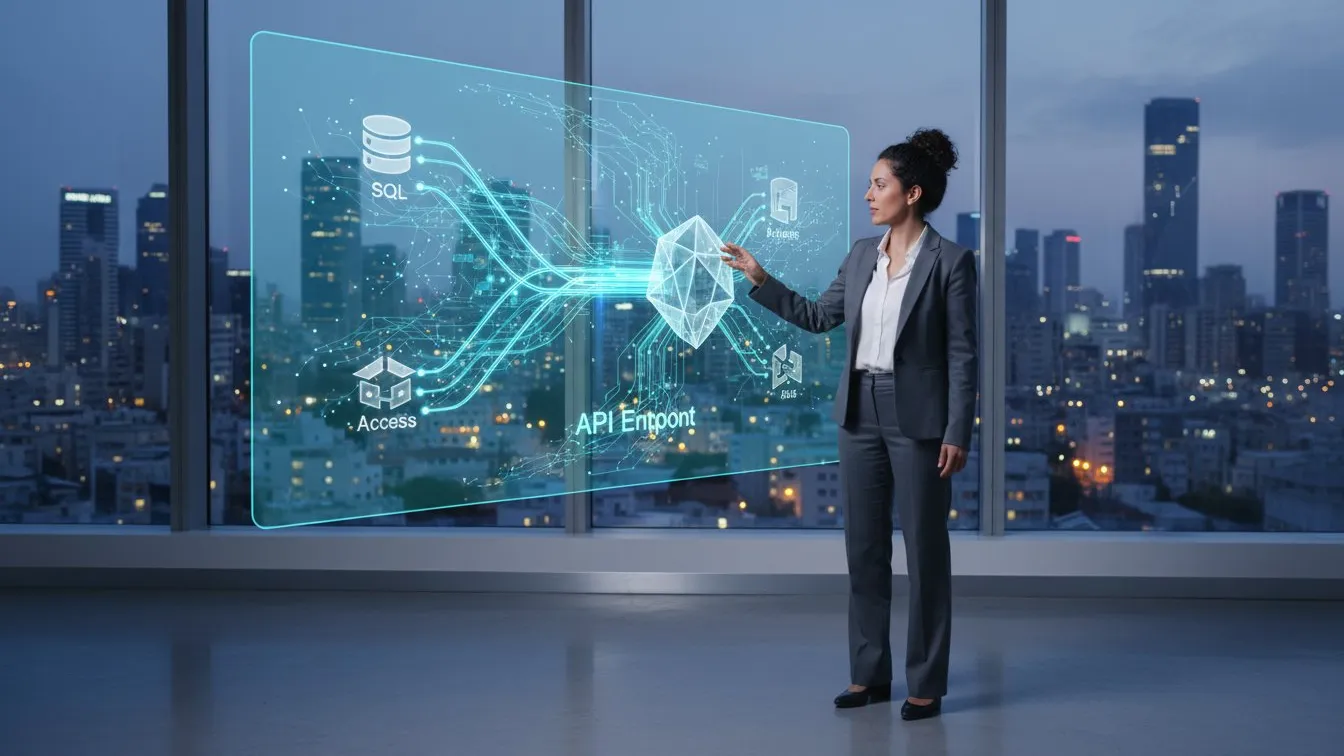
- Open ecosystem: smooth integration with external APIs. Automatic connection to clearing systems, sending WhatsApp messages directly from the system, and sync with available government services.
Performing modernization of Access systems is the most correct strategic move for companies that want to keep their competitive edge. This is the stage where technology stops being a burden and becomes a powerful growth engine.
The three paths to modernization: which solution fits you?
Choosing the right path for modernization of Access systems is a critical business decision that affects organisational efficiency for years ahead. In 2026, businesses can no longer settle for “plaster” solutions. A clear technology vision is required. According to current modernization data, organisations that choose a hybrid strategy succeed in cutting maintenance costs by about 30% on average. The first and most important stage in every path is improving database performance, an action that makes sure the existing infrastructure is ready for the move to the new digital era with no bottlenecks.
Upgrade to SQL Server: the power of an organisational database
This is the preferred path for organisations that need stability and high performance with no full change of the user interface. The move from file architecture (MDB/ACCDB) to a central SQL Server changes the rules of the game. It allows management of thousands of concurrent users, military-level information security and a dramatic improvement in query speed. Using SQL Azure allows full cloud management, which removes the need for expensive local server maintenance in Israel and guarantees business continuity in every situation.
Hosting Access in the cloud: the Quick Win solution
For businesses looking for fast results on a controlled budget, hosting Access in the cloud is the precise solution. Instead of developing the system again, you move the existing application to a secure virtual work environment. The advantage is clear: immediate accessibility from every device and every place, with no need for local installations. This is an ideal solution for companies with distributed branches or teams that work from home, because it saves the purchase and maintenance costs of physical servers in the office, estimated at thousands of shekels a year.
Conversion to WEB: a modern user experience
When the need is maximum flexibility and a UX with no compromise, a full conversion to Web is the right path. Using advanced technologies such as Vue.JS or React lets you create a fast, designed, intuitive browser interface. Modernization of Access systems to a web interface lets field employees access data from tablets and mobile in real time, while using advanced browser-based security protocols. This is the move that produces the largest impact on the employer brand and on work efficiency.
As an inseparable part of every upgrade, we mix in advanced BI reports. The goal is to turn raw data into management insights that drive growth. Data-based decisions are the new standard in 2026, and they are what separate a business that survives from a business that leads. If you are looking for the technology precision that will lead you forward, it is worth examining how Apoint expertise can turn your old system into a powerful growth engine.
ROI and the budget question: how much does it cost you not to upgrade?
The real cost of an old system does not appear on the profit-and-loss line directly. It hides between the lines. Many managers mistakenly think that keeping what exists is the cheapest option. The business reality in Israel of 2026 proves otherwise. Modernization of Access systems is a strategic investment that pays itself back through cutting wasted resources and improving competitiveness.
A cost-benefit analysis reveals that developing a system from zero requires huge budgets and a long embedding time. By contrast, upgrading the existing system uses the business logic that was already built over years. This is a saving of about 40% to 60% in development costs compared with a full replacement of the infrastructure. Precision here is critical. Before you set out, you must run professional Access development consulting to map the bottlenecks and prevent unnecessary expenses.
Calculating lost work hours reveals a worrying picture. An employee who waits 10 seconds for every query in a slow system loses about 15 minutes a day. In an organisation with 50 users, this is a loss of over 3,000 work hours a year. In terms of average employer cost in Israel, this is cumulative damage of hundreds of thousands of shekels. Modernization of Access systems turns that time into pure business value.
Parameters for choosing the economic upgrade path
The decision on the upgrade path must rest on dry data. Comparing ongoing maintenance costs in a Legacy system versus a one-time investment in an upgrade usually shows ROI within 12 to 18 months. The modern system gives flexibility to add new modules with no need to re-plan, which lets the business respond to market changes at peak speed. Customer service improves through fast access to data, which raises customer-retention rates by 15% on average.
The economic risk in Legacy systems
- Crash costs: restore of data from a damaged database can cost over ₪50,000 for a single event, not including lost revenue during the downtime.
- Shortage of people: finding developers who specialise in old Access versions becomes an expensive, complex task as the technology ages.
- Technology isolation: inability to interface with clearing systems, bank APIs or modern AI tools leaves the business behind.
The bottom line is clear. Technology freeze is an expensive bet. A calculated, precise upgrade is the only way to make sure the system continues to serve business growth and does not become a weight that pulls the organisation down.
The roadmap to successful modernization: step by step
A process of modernization of Access systems does not stop at copying files to the cloud. It is a business evolution. Industry data shows that 74% of technology projects that fail do so because of a lack of ordered methodology. In 2026, precision is not a privilege. It is a threshold condition for survival. To make sure the new system produces real impact, you must follow a hard, professional work protocol.
Characterisation and strategic planning stage
Everything starts with mapping. We do not only examine code. We analyse business processes. At this stage a full mapping of all tables, queries and existing relationships is performed. The goal is to identify bottlenecks that were created in the last decade. Choosing the target architecture is a fateful decision: move to a full cloud model (Azure/AWS) or stay in a hybrid form? Defining clear milestones allows full control of budget and timelines, while minimising technology risks.
Performing the upgrade and moving the data
The heart of the move is the Upsizing process. Moving the database from Access to SQL Server gives stability and performance that cannot be achieved in the old technology. This stage includes:
- Data Cleansing: deleting duplicates and fixing historical errors in the database.
- Fitting VBA code: rewriting old functions and fitting queries to work against a central data server.
- Load tests: simulating concurrent multi-user work to guarantee a response speed of less than 2 seconds for every action.
The move is performed under a Zero Downtime strategy. The business continues to work on the old system while the new one is built in a sterile development environment. The final sync is performed at a predefined point in time, usually outside work hours, to prevent loss of expensive work hours.
Embedding and long-term support
Excellent technology is worth nothing without user adoption. Change management is critical. Focused employee training reduces the natural resistance to innovations and raises productivity by 40% already in the first month. After Go-Live, professional accompaniment becomes a protection wrap. Modernization of Access systems is not a one-time action. It requires planning of ongoing updates to stay relevant also against changing cyber threats and new market demands.
It is time to turn your database into a powerful growth engine. Do not let old systems delay your vision.
Schedule a strategic characterisation meeting to upgrade your system
A Point precision: your partner for modernization in 2026
Choosing a technology partner is the most critical decision in a process of modernization of Access systems. In 2026, old systems are no longer only slow. They are a real bottleneck for business growth. The experience of A Point Systems lets us bridge the gap between business logic built over decades and advanced cloud technologies. We do not only replace code. We rebuild your ability to compete in the dynamic market.
Our expertise focuses on a smart mix between powerful databases such as SQL Server and modern user interfaces. We have seen how systems that were stuck in the past become, within a few months, growth engines that manage millions of data rows in real time. Precision is our compass. Every modernization process is performed under a commitment to full business continuity. Your business does not stop while we upgrade the engine. We bring technology confidence that comes from dozens of successful projects in the business and industrial sector in Israel.
The move to the cloud requires a deep understanding of information security and modern protocols. We make sure your data will not only be accessible from anywhere, but also protected at the highest level. The modernization we lead turns the system into a flexible, fast, secure work tool, one that lets managers make data-based decisions within a few seconds.
Our added value in the modernization process
We understand Israeli business logic in depth. This includes fitting to local regulations, work with Israeli suppliers and integration of complementary solutions such as credit-clearing interfaces and advanced API connections to third-party systems. Our accompaniment is personal and comprehensive, from the strategic characterisation stage through ongoing maintenance that makes sure the system stays relevant also in a decade.
- Precise characterisation of the organisation’s needs before writing a single line of code.
- System performance improvement of up to 400% in the move to SQL Server.
- Intuitive user interfaces (UI) that shorten training time for new employees.
- Available, professional technical support that knows every corner of your system.
Your next step forward
The time to act is now. Do not wait for the system to stop working at a critical moment or to be exposed to outdated security holes. A process of modernization of Access systems starts with a professional, deep diagnosis of the current state. We invite you to a consulting meeting where we will map your technology challenges and present a clear roadmap. Let us turn technology from an operational burden into a clear competitive advantage in the 2026 market. Precision starts at one clear point.
Turning your data into a growth engine in 2026
The era of local, clumsy databases has officially ended. In 2026, the ability to respond fast and analyse complex data in real time is the decisive competitive advantage of every organisation that aims to grow. Modernization of Access systems is no longer only a technical task on the to-do list. It is a refined strategic move that sets your impact potential in the global market. The precise move to a SQL Server environment and use of Azure’s advanced cloud infrastructure give the organisation stability, uncompromising security and scalability with no oppressive technical limits.
A Point expertise was built over more than 15 years of experience with the most complex information systems in the Israeli market. We apply in every project a proven Zero Downtime strategy, which makes sure your business activity continues to run at full power while we upgrade your technology core. The mix of technology precision and a modern business vision lets us refine complexity into a simple, winning product. This is the time to leave the limits behind, stop compromising on performance and move to a digital solution tailored exactly to your size.
Contact A Point specialists for modernization of your system
Frequently asked questions
Does modernization of Access systems require redevelopment of the whole system?
No. Modernization of Access systems does not require building from zero. You can apply a hybrid approach where the existing user interface is kept, while only the database is converted to SQL Server. This method saves up to 60% of development costs and allows full business continuity with no operational shocks.
How long does an Access-to-SQL-Server upgrade take?
The upgrade usually lasts between 14 and 45 work days. The exact duration is set by the number of tables and the complexity of existing queries. Focused projects that include only conversion of the database usually finish in less than three weeks, including integrity tests and data sync.
Will my data be safer in the cloud than on the office server?
Data is significantly safer in the cloud thanks to advanced security protocols and 256-bit encryption. Leading cloud providers offer automatic backups every 5 minutes and geographic survival that does not exist on a local server. 94% of businesses that moved to the cloud report an improvement in information-security level and a drastic cut in data-loss risks.
Can we keep using the familiar Access interface after the upgrade?
Yes. Users can keep working with the familiar interface with no visual change. The modernization happens under the surface, so employees enjoy improved stability with no need for new training. This is the main advantage of modernization of Access systems, which mixes new technology with a continuous user experience.
What is the difference between hosting Access in the cloud and a full conversion to Web?
Cloud hosting allows access to the existing system through a remote desktop within 48 hours of setup. Conversion to Web is a comprehensive development process in which the system becomes an application that runs in the browser. Hosting is a fast solution for remote work, while conversion to Web gives maximum flexibility for every device and full mobility.
Will the system be down during the modernization process?
System downtime approaches zero and focuses on a short window of only a few hours. Development and testing happen in a parallel, isolated environment so as not to disturb ongoing work. The final move to the new data is usually performed outside work hours, at night or on weekends, to guarantee business continuity.
How does modernization affect users’ work speed?
Modernization improves data-retrieval speed by up to 300% in multi-user systems. The move to SQL Server solves the familiar “freeze” problem when more than 5 users perform actions at the same time. The system becomes stable and fast even when data volume crosses the 2GB threshold, the end limit of traditional Access files.
Is it worth upgrading an Access system if we plan to move to an ERP in the future?
Upgrading the system is a smart strategic step that prepares the infrastructure for the future move to ERP. A modern database lets you run Data Cleansing more efficiently, which saves expensive time at the migration stage to the large system. Investing in an upgrade now prevents crashes of critical systems and makes sure organisational information stays accessible and ordered.